The FollowMe concept by owlRobotics provides an innovative solution for material flow in warehouses and production environments.

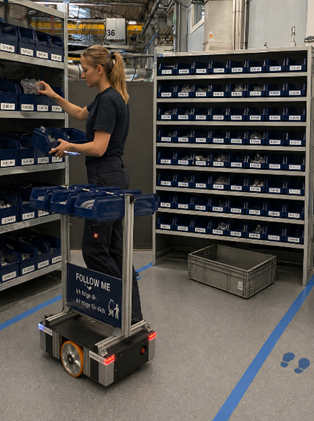
In the warehouse, required parts are picked and loaded directly into the containers of a FollowMe unit that autonomously follows the employee. This eliminates the need to manually pull or push transport carts, while keeping both hands freefor the actual picking process.

FM001.png


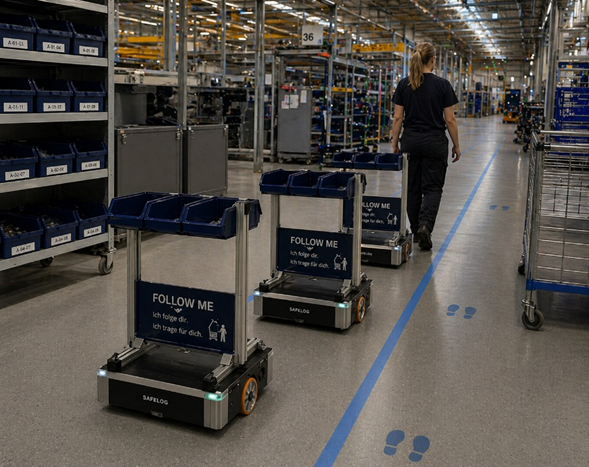
After several material units have been prepared, multiple FollowMe vehicles can be arranged into a convoy.
This convoy can then be guided through the production area by just one employee and delivered to the required assembly stations.
In the future, this material supply process is planned to be handled fully autonomously by the robots.

FM002.png

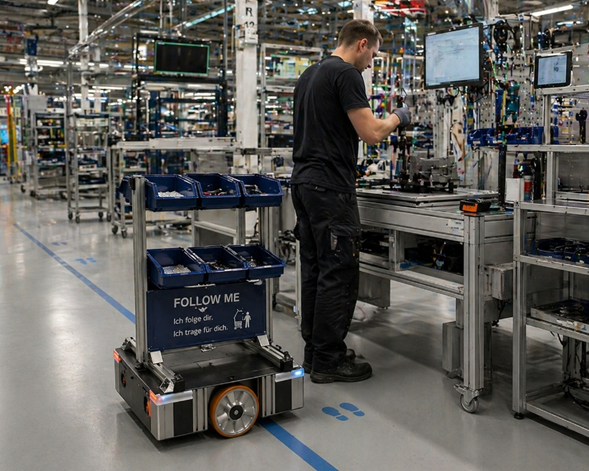
At the assembly line, the FollowMe units are positioned exactly where the material is needed.
The robot can continue to follow the operator directly – a major advantage especially in large production areas where unnecessary walking distances would otherwise consume time.

FM003.pngFM004.png

This creates clear benefits:

  • One employee can supply multiple workstations at the same time
  • Several FollowMe units automatically move in convoy
  • Reduced walking distances and lower labor effort
  • Material available directly at the line or assembly station
  • Flexible supply without fixed conveyor systems
  • Scalable for different production sizes

In short:
One employee controls the material flow – the FollowMe convoy handles the transport.

Remark:
All pictures are AI-generated concept visualizations. Product under continuous development.


whatsapp image 2026 04 16 at 11.36.37  

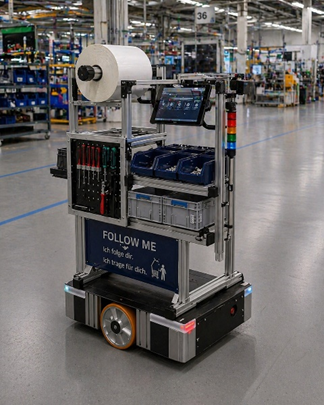
A mobile assistant robot for assembly and logistics, featuring a modular carrier structure for material boxes, tools, or bins used for order picking. This configuration demonstrates one possible use case of how employees in warehouses, workshops, or production environments can be supported in their daily work – flexibly, mobile, and without complicated operation.

whatsapp image 2026 03 11 at 15.33.02


Operation Without Additional Technology

A key development principle of the FollowMe Robot is simplicity: the user should not need any additional technology to control the robot.

No app, no tablet, no remote control.

Operation is direct and intuitive through:

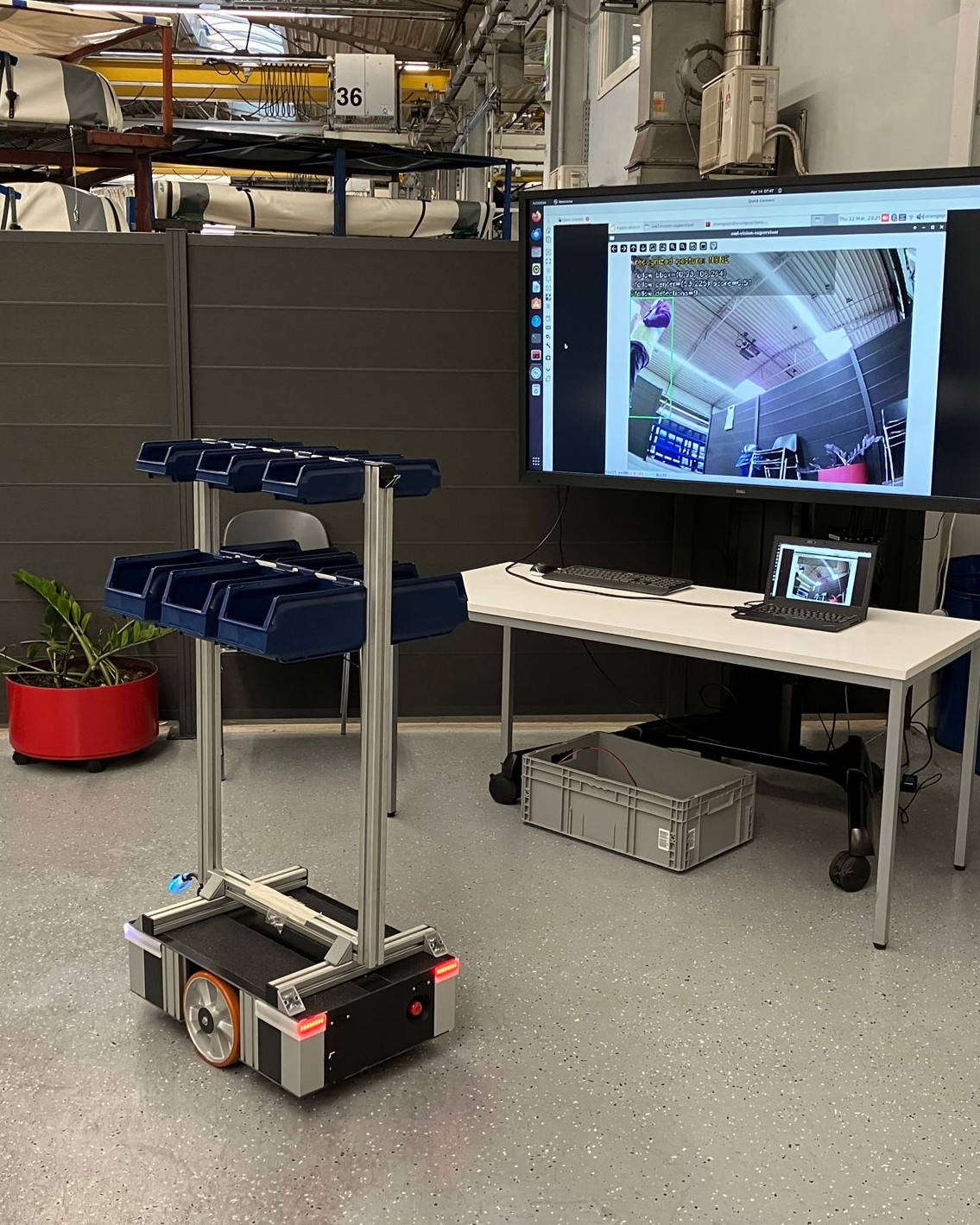
  • Gesture control – simple hand signals for start, stop, or follow
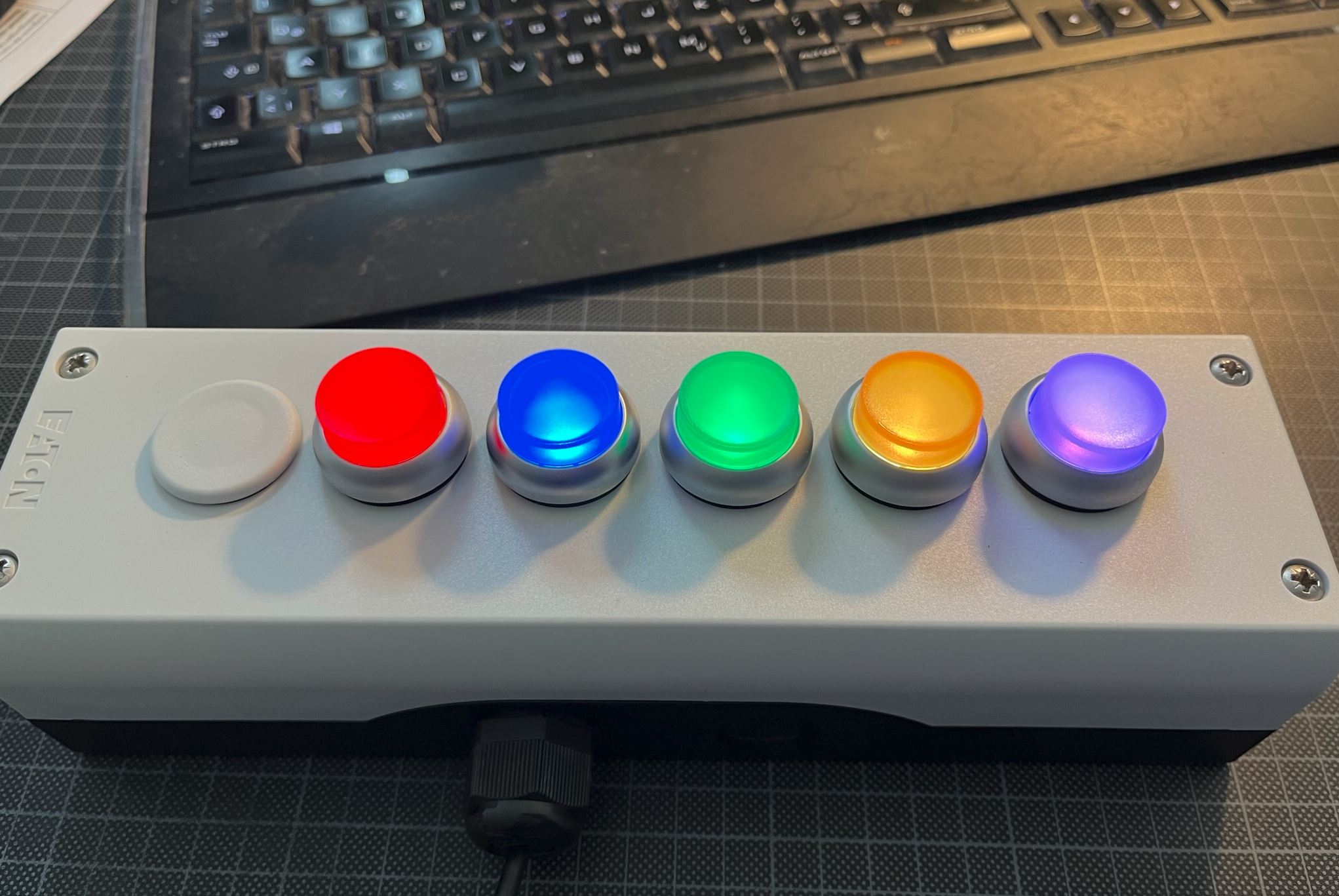
  • Foot switch – a robust control option for industrial environments
  • Automatic person detection for the FollowMe principle

This keeps the focus on the actual work – not on the technology.

Mobile Support for Order Picking

In warehouse environments, the FollowMe Robot can accompany employees directly and take over transport tasks. While items are picked or sorted, the robot automatically moves along and keeps the bins within easy reach.

This creates a mobile workstation directly in the warehouse aisle.

Benefits:

  • reduced walking distances
  • faster picking processes
  • both hands free for work
  • improved ergonomics
  • intuitive operation with minimal training required

Material and Tool Carrier for Assembly Stations

The robot is also ideal for use in production as an intelligent material cart. Tools, screws, components, or consumables can be transported directly to the workstation and made available where needed.

Especially in dynamic production environments, ease of use is essential – particularly when different employees work with the system.

Modular Concept

The shown setup is modular and can be adapted to different requirements:

  • bin systems for order picking
  • tool holders
  • material transport
  • custom application-specific configurations

Outlook

The FollowMe Robot represents a practical form of robotics: technology that works in the background and adapts to people – not the other way around.

Easy to operate, ready to use, and delivering real added value in everyday industrial work.

Our partner, MOTION-HUB® GmbH from Graz, has introduced its modern sweeping robot, which was developed in close collaboration with us, owlRobotics GmbH. Our innovative hardware and software architecture perfectly complements the high-quality mechanics of the MOTION-HUB® robot platform, ensuring efficient and reliable cleaning performance.

The sweeping robot impresses with a cleaning capacity of up to approximately 1,200 m²/h as well as an autonomous self-emptying function, allowing it to operate fully independently with minimal service requirements—ideal for industrial indoor and outdoor areas such as production facilities and logistics halls.

MOTION-HUB® utilizes state-of-the-art robotics technology with intelligent navigation and automatic live mapping of cleaning areas, enabling precise and safe operation even in complex environments. At the same time, the use of this technology reduces costs, optimizes processes, and increases sustainability in surface cleaning.

MOTION-HUB® GmbH offers the cleaning of industrial indoor and outdoor areas using these modern cleaning robots. In doing so, MOTION-HUB® develops and manufactures the high-quality robot mechanics and provides its customers with the robots along with comprehensive service and support offerings.

The complete control hardware as well as the entire software are developed in-house by us and ensure precise, stable, and high-performance robot control, perfectly tailored to the requirements of demanding industrial environments.

Take a look at MOTION-HUB®

Sweep1.jpg

Theory is great — but real innovation only happens when you build, test, and bring things into motion.
With the owlStarter Kit (owlController + 2× owlDrive-125 + motors incl. mounting brackets), knowledge turns into hands-on practice: a complete platform for modern mobile robotics.

This is where electronics, software, and mechanics come together in a real system project.

 What makes this project special?

  •  High-performance motor controllers for real dynamics
  •  Modular CAN bus architecture, just like in industrial applications
  •  Programming with C++, Python, or ROS
  •  Expandable with sensors such as LiDAR, IMU, and cameras
  •  From the first rolling test to a fully autonomous robot

 Mechanics explicitly welcome!

It’s not just about programming:

  •  Designing a custom mechanical chassis
  •  Developing functional and stylish 3D-printed housings
  • ⚙️ Optimizing drivetrain, suspension, protection, and cooling
  •  Combining design, function, and manufacturing

This creates a true mechatronic overall system — just like in real industrial projects.

By bringing together diverse talents — from software and electronics to mechanics and design — participants not only develop technical skills but also actively strengthen teamwork, communication, and professional project management.
These interdisciplinary skills are essential in modern engineering and product development.

 Possible project ideas:

  • Autonomous mobile robot
  • Follow-Me robot
  • Navigation and mapping with sensor fusion
  • Web interfaces and telemetry
  • AI-based object detection
  • Custom enclosure design and lightweight constructions

 Perfect for:

  • Team-based vocational training (mechatronics, IT, electronics, mechanics)
  • University projects and semester projects
  • Makerspaces and robotics clubs
  • Research and prototyping teams

Those who design, build, and program together today are creating the robotics of tomorrow.

 Interested in an interdisciplinary hands-on project?
Let’s build robots together!
Send us a message if you’d like to learn more.

The owlKit


kit.png


Mini Rover mit 2 GFK Platten 30x20 cm und Freilaurolle vorn

rover.png


#robotics #STEM #education #mechatronics #3Dprinting #engineering #embedded #CANbus #innovation #owlRobotics


Bot_xs.png

Our goal was to create a simple, compact, and practical test robot, ideal for use in an office or lab environment. The design is intentionally minimalistic—using only a few components, a fully functional robot can be built quickly.

Required Components

For the basic setup, you only need:

  • owlStarter Kit
  • 24 V battery
  • e.g. GFRP plates (approx. 20 × 30 cm, 3 mm thick)
  • freely rotating front wheel / caster
  • a few screws and cables
  • 3D-printed wheels

Mechanical Assembly

The overall dimensions of the robot and the choice of materials can be adapted to your needs. The only important consideration is that the construction should not be too heavy for the drive motors. If necessary, more powerful motors can of course be used.

First, mount the brackets for the geared motors onto the base plate.
There are two common mounting options:

  • Rear-mounted motors (approx. 50 mm from the rear edge to the motor shaft center):
    → requires a freely rotating wheel or caster at the front.
  • Centrally mounted motors (e.g. for a round robot or symmetric driving in both directions):
    → requires two freely rotating casters, one at the front and one at the rear.

Next, drill a sufficiently large hole at a suitable position in the base plate to route the motor cables neatly.
Then print and mount the two wheels—this completes the basic mechanical assembly.
Bot_unten.pngBot_oben.png

Electronics & Final Steps

Now mount the battery and electronics onto the base plate (using screws or double-sided tape) and connect the wiring.

Connection.png
At this point, the minimalist test robot is already operational.

In our setup, we additionally install a second cover plate, mounted with four threaded rods. This protects the electronics and provides mounting points for a camera and ultrasonic sensors.

Finally, install the software on the SD card, briefly configure the owlDrive motor drivers, and the test robot is ready to go.


Documentation & Support

We are currently preparing detailed documentation as well as step-by-step videos for this setup.
If you don’t want to wait, feel free to get started right away—and if you have any questions, just contact us via the contact form.

About owlRobotics GmbH

owlRobotics GmbH stands for high precision navigation algorithms for self driving robots like lawn mowers and similar vehicles, based on our Sunray-OS or open standards.

We use cookies

We use cookies on our website. Some of them are essential for the operation of the site, while others help us to improve this site and the user experience (tracking cookies). You can decide for yourself whether you want to allow cookies or not. Please note that if you reject them, you may not be able to use all the functionalities of the site.