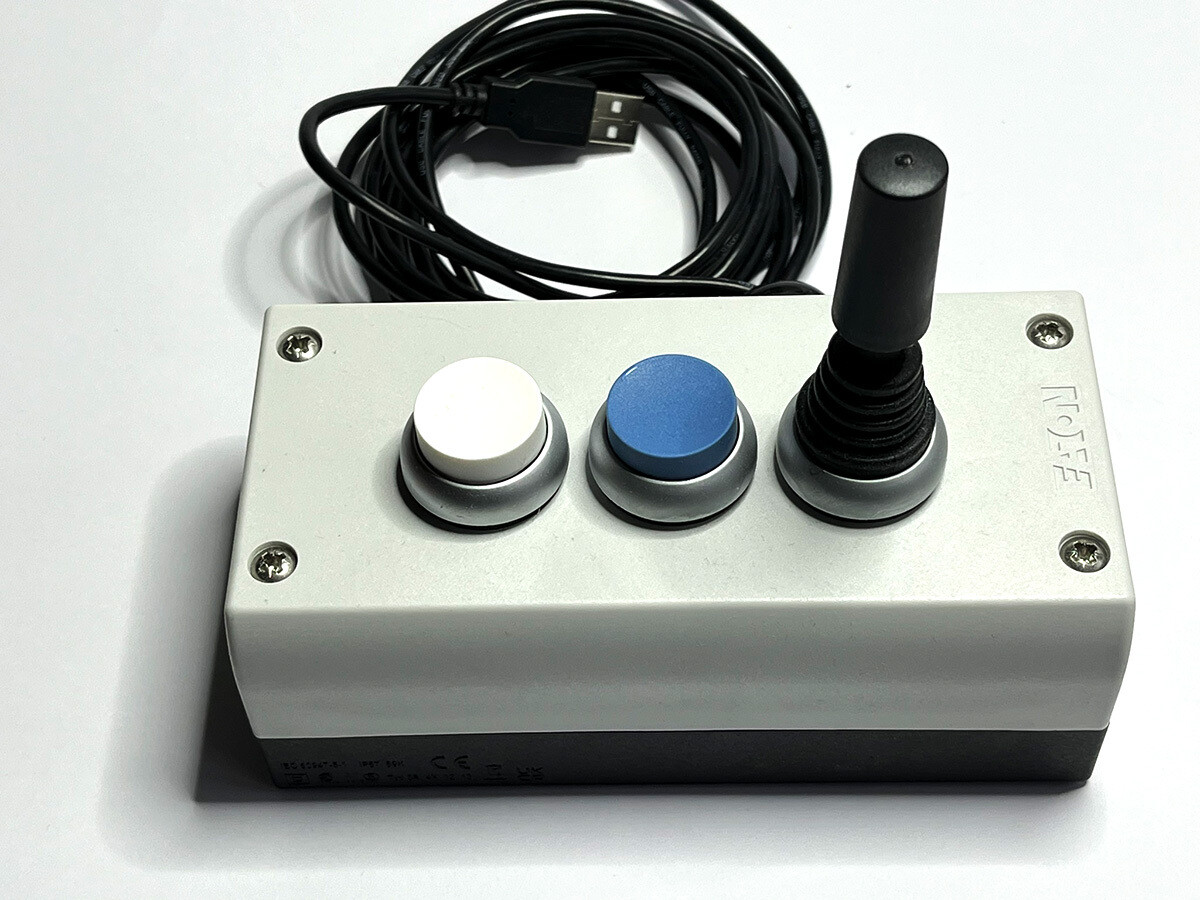
Haben Sie schon einmal eine PC-Tastatur mit Arbeitshandschuhen benutzt? Auch für den täglichen Einsatz in der Produktion ist dies denkbar ungeeignet. Sind Sie auf der Suche nach einfachen, robusten Steuerelementen, um Befehle auf Ihrem PC auszugeben? Dann sind unsere Taster und Pushboxen genau das Richtige. Mit der mitgelieferten Software können Sie jeder Taste ein individuelles Zeichen, einen Befehl oder sogar eine Mausaktion zuweisen. Mit dieser Lösung hat einer unserer Kunden sein Schweißzentrum ausgestattet und Tastatur und Maus abgeschafft. So dass die Schweißer jetzt nur noch den branchenüblichen Knopf drücken, um mehr Material anzufordern, die Aufträge fertig zu melden und vieles mehr. Die Einsatzmöglichkeiten sind vielfältig. Unsere Taster und Pushboxen finden Sie hier im Online Shop.


PBoxIlo

There is no translation available.

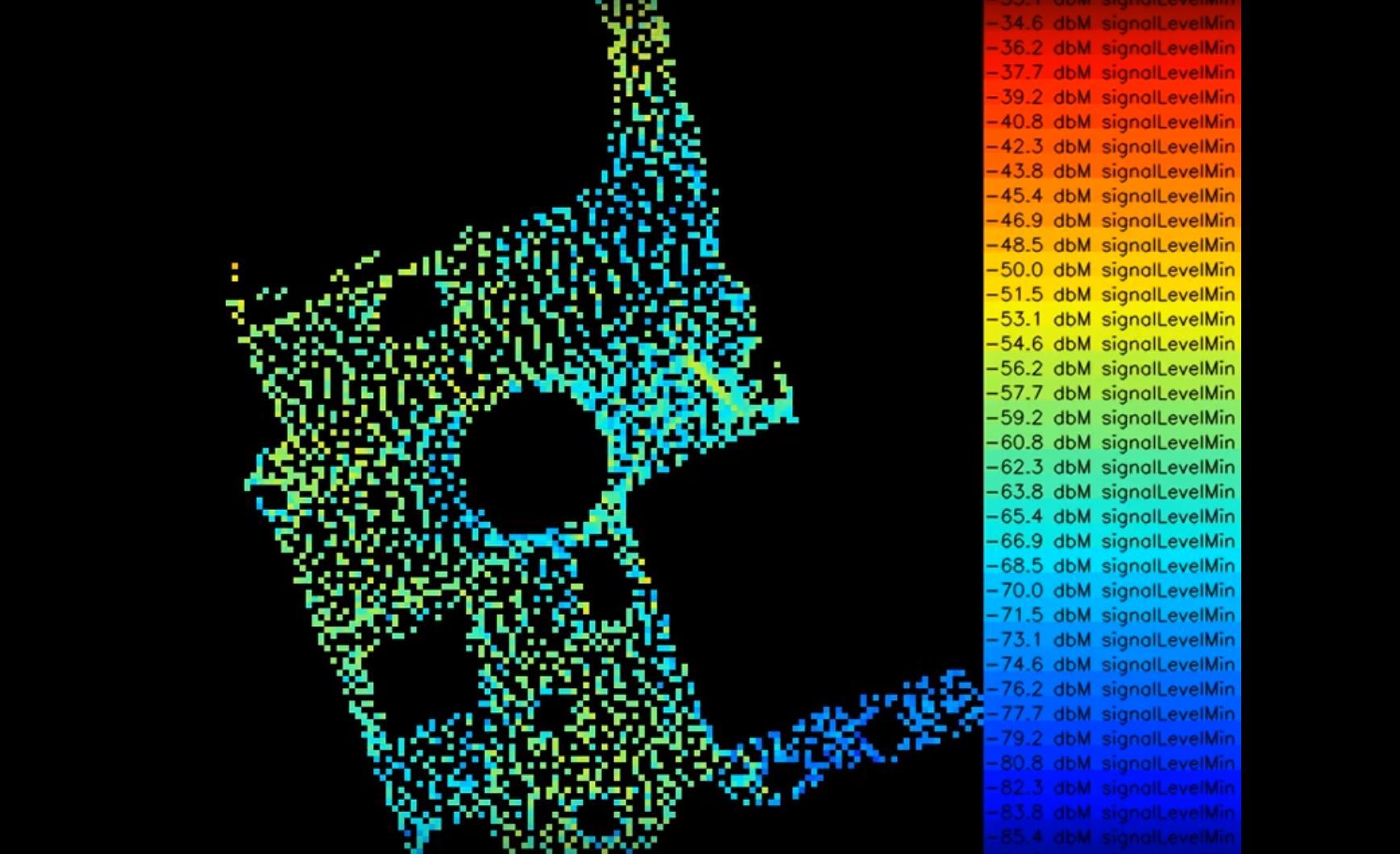
How to define a working area for a robot therefore we wrote a SLAM to detect cones on all corners of the area. We use a new generation of LIDAR, special made for robotic vehicles.
See how it works and visit our shop for more information about the Livox MID-360.
Cone localization (up to 30m) with arbitrary number of traffic cones at arbitrary places using a Livox Mid-360 LiDAR (360x59° FOV) In this owlRobotics project (https://owlrobotics.de), I'm using arbitrary traffic cones (as perimeter) to define a working area for a robot within 30m using a Livox Mid-360 LiDAR (360x59 FOV) on the robot. Uses LiDAR localization ( https://github.com/SylarAnh/fast_lio_... ) and cone detection. In this cone detection approach, we don't use any cone geometry. At 30m distance, the LiDAR would not be fast enough on a moving robot (5 Hz) to capture any geometry in a single frame. Here, we just use the cone reflectivity (1 point for each cone) to filter cones and constraints (surrounding points) to further filter the cones. The cool thing here is that the Livox non-repetitive scanning pattern always returns at least 1 point for each cone and this up to 30m.

We offer Livox MID-360 in oure online shop, here.

There is no translation available.

3D LiDAR product finder

Download the document as PDF here.
or here;3D LiDAR product finder - Page

You will find LIDARS in our store, klick here


Depending on your specific application usage, we can assign your application to one or more of the following LiDAR scenarios:

  • 3D Odometry
  • Localization
  • Mapping/3D scanning/ 3D measurement
  • Object recognition
  • Object tracking
  • Obstacle detection
  •  
  •  
  •  
  •  

read more here;3D LiDAR product finder - Page

There is no translation available.

'cone' localization (up to 30m) with arbitrary number of traffic cones at arbitrary places using a Livox Mid-360 LiDAR (360x59° FOV) In this owlRobotics project, We are using arbitrary traffic cones (as perimeter) to define a working area for a robot within 30m using a Livox Mid-360 LiDAR (360x59 FOV) on the robot. Uses LiDAR localization ( https://github.com/SylarAnh/fast_lio_... ) and cone detection. In this cone detection approach, we don't use any cone geometry. At 30m distance, the LiDAR would not be fast enough on a moving robot (5 Hz) to capture any geometry in a single frame. Here, we just use the cone reflectivity (1 point for each cone) to filter cones and constraints (surrounding points) to further filter the cones. The cool thing here is that the Livox non-repetitive scanning pattern always returns at least 1 point for each cone and this up to 30m.


There is no translation available.

A new challenge for our owlDrive.
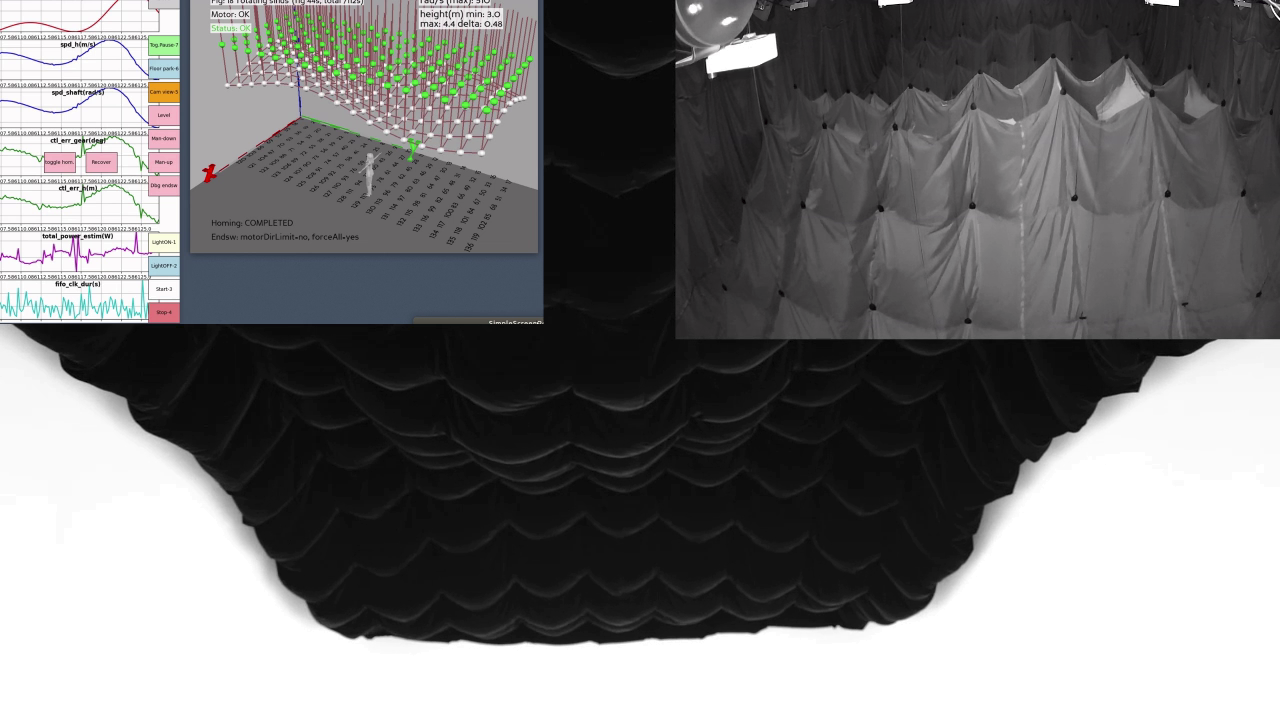
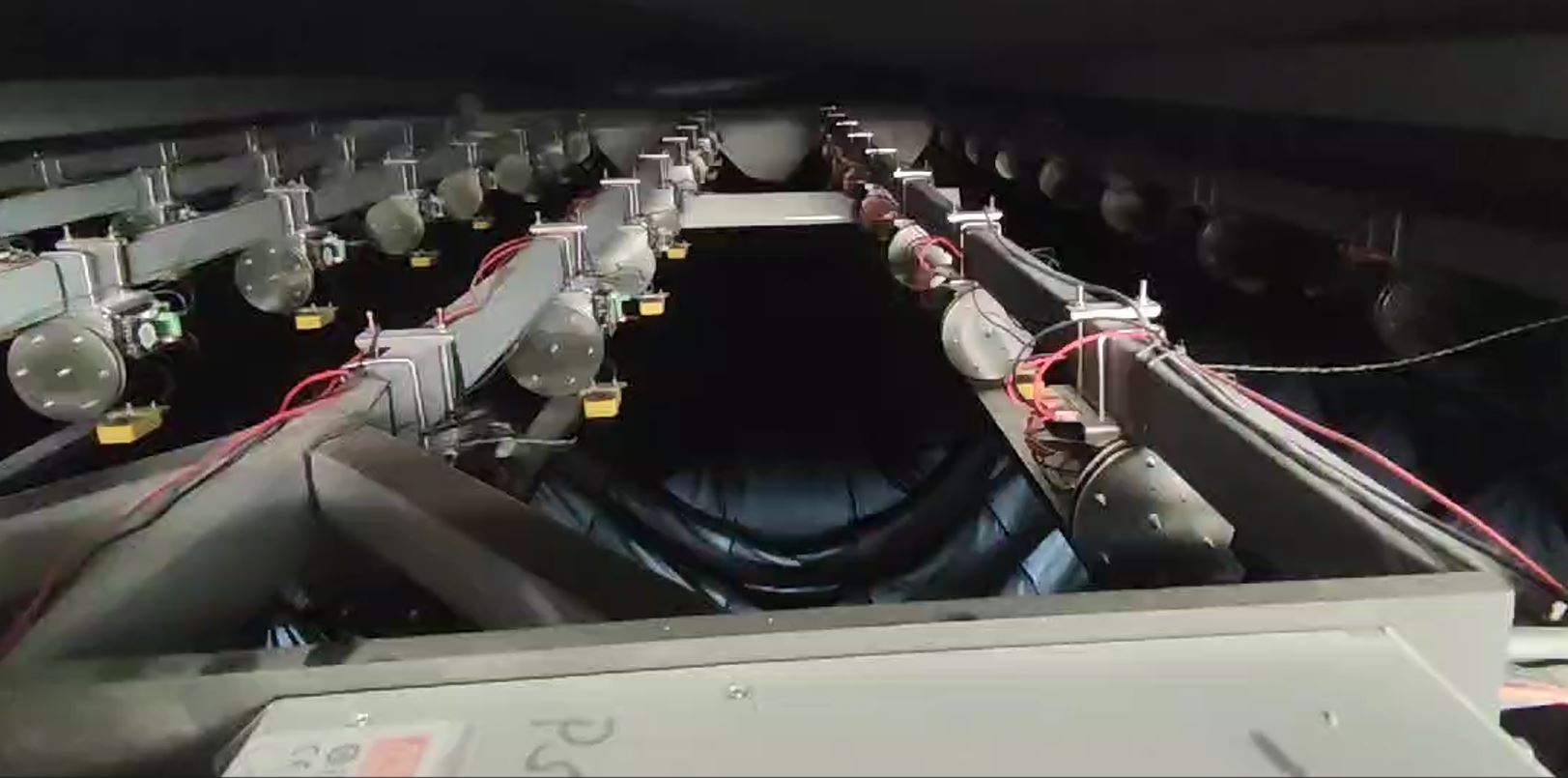
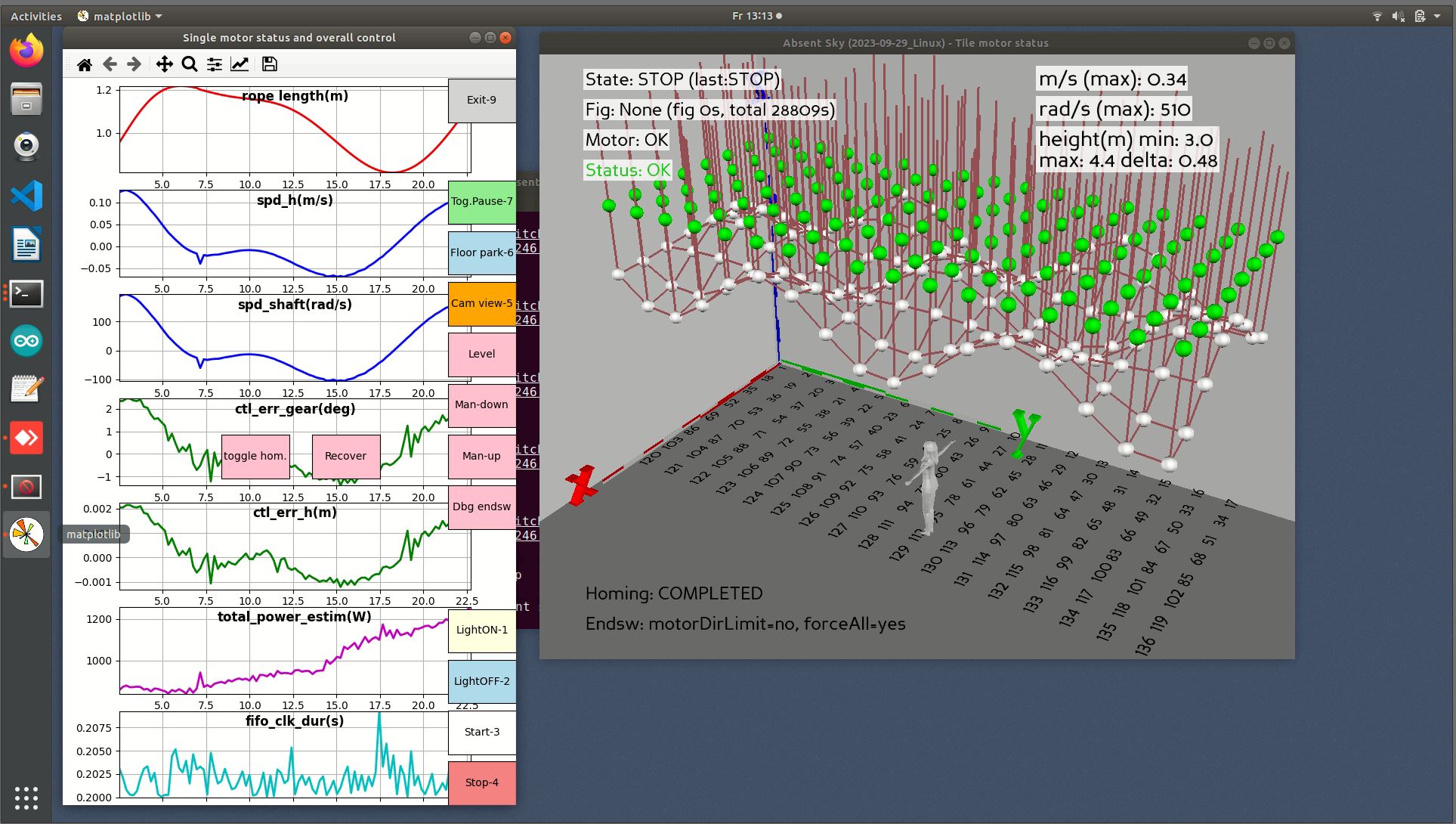
Actually, we focused on moving robots with the owlDrive. But a customer became aware of our software synchronized motors and asked us to control more than 130 motors synchronized to animate an object and move it synchronized. We didn't have such a high number of networked controllers in mind during development and neither did the animation, but after checking the requirement, we were able to determine that the owlDrive masters these requirements, with very little adaptation to the software. Among other things, we still must integrate a 4th operating mode, which reaches the specified end position in a given time. Actually, you specify the speed at which the point is to be reached. If, however, in a synchronized lifting function, the first motor must lift the object by one meter, but the last motor has to lift it 2 meters, the first motor would reach the end point in half the time. But we want both motors to reach their end point at the same time. But that's not an issue for our powerful controller, even if it requires more than 130 motor units to synchronize within a few milliseconds. Thus, the owlDrive can now also be used as a modification as owlMashDrive for mechanical animations and synchronized sequence controls. Do you also have complex applications in which motors have to behave synchronously? We would be happy to check whether the owlDrive can also easily implement your requirements. (Video, theoretical simulation of networked owlDrive-controlled motor network)

About owlRobotics GmbH

owlRobotics GmbH stands for high precision navigation algorithms for self driving robots like lawn mowers and similar vehicles, based on our Sunray-OS or open standards.